 Italy
Italy Leonardo
AW159 Wildcat
Twin-engine naval and battlefield helicopter optimized for anti-surface warfare and armed reconnaissance, integrating Sea Venom anti-ship missiles and lightweight torpedoes.
Compiled from public sources ·primary reference ↗
291
km/h
518
km range
💲 ≈ $45,000,000, The UK's 62-aircraft Wildcat program cost about GBP 1.7 billion, roughly GBP 27 million (USD 34 to 37 million) per airframe on a program-average basis including development. Fully outfitted export contracts bundling ASW sensors, torpedoes and support run considerably higher, with the Philippine Navy's most recent order working out to roughly USD 100 to 124 million per helicopter including spares and training, so USD 45 million is a reasonable mid-point for the aircraft without a heavy mission-system package.
Procurement snapshot
Availability & export
Italian export-licensed
UAMA authorisation; standard EU/Wassenaar controls.
Channel: Direct commercial / G2G
Fielded & proven
Operator data not public
Status: active.
Lifecycle cost (est.)
$113M – $158M
Acquisition is only ~30% of lifecycle cost, operating & support dominate over ~30 yrs. Rough 2.5–3.5× the unit price. Published studies put O&S anywhere from ~55% to ~70% of lifecycle cost depending on platform and method, which is why this is a band and not a single number. How we estimate this →
Interoperability
No standardised NATO calibre / datalink detected in public specs.
Competitive field
42 comparable systems from 11 other manufacturers
Counted in the WeaponSpecs database: helicopters built by another manufacturer. A count of what this catalog holds, not a survey of the whole market. See the alternatives →
Derived guidance from public data, export regime by country of origin, lifecycle from the GAO ~30% acquisition rule. Verify eligibility, pricing and offsets with the manufacturer and your acquisition authority.
Compatible munitions & weapons
Publicly reported weapons the AW159 Wildcat can carry. Linked items have a full spec page.


Full specifications
Performance
Speed, range, altitude and engagement capability.
| Max speed Maximum level speed. For aircraft this is at optimal altitude; for ground vehicles, top road speed. Higher means faster response and better kinematic performance. | 291 km/h |
|---|---|
| Range Maximum distance: ferry range for aircraft, operational range for vehicles, maximum engagement distance for missiles. Higher means more standoff or persistence. | 518 km |
| Endurance Time on station. Critical for UAVs and patrol platforms, higher means longer persistent coverage. On a ground robot, published continuous run time on a full charge or fuel tank. | 2.3 h |
Firepower
Armament, payload and guidance.
| Main armament Primary weapon: main gun, cannon or missile type. | Pintle-mounted 12.7 mm Browning M3M machine gun (naval) or 7.62 mm FN MAG (army) |
|---|
Physical
Dimensions, weight and crew.
| Length Overall length including gun/probe where applicable. | 15.24 m |
|---|---|
| Height Overall height. Lower profile is harder to spot and hit for ground vehicles. | 3.73 m |
| Empty weight Weight without fuel, ammunition or crew. | 3,300 kg |
| Combat weight Fully loaded weight. Lighter eases transport and bridging limits; heavier often means more armor. | 6,000 kg |
| Crew Personnel required to operate. Fewer reduces exposure; autoloaders trade a loader for mechanical complexity. | 2 |
| Troop capacity Number of embarked troops/passengers (IFV, APC, transport). Higher carries more. | 6 |
Propulsion
Engine, power and fuel.
| Engine Powerplant model and type. | LHTEC CTS800-4N turboshaft |
|---|---|
| Engines Number of engines. Twin-engine gives redundancy at higher cost. | 2 |
| Engine power Engine output power. Higher moves more weight faster. | 1,361 hp |
| Propulsion type Turbofan, turboshaft, diesel, gas turbine, solid-fuel rocket, ramjet… | Turboshaft |
Sensors & avionics
Radar, sensor suite and datalinks.
| Radar Primary radar. AESA (active electronically scanned array) is the current state of the art. | Leonardo Seaspray 7400E X-band AESA surveillance radar |
|---|---|
| Sensors IRST, EO/IR turrets, laser designators, sniper pods, thermal sights. | Wescam MX-15Di electro-optical/infrared turret, Thales Compact FLASH dipping sonar (export variants) |
Program
Cost, production scale and operators.
| Unit cost Approximate flyaway/unit cost where public. Defense pricing varies hugely by contract, offsets and configuration. Lower is cheaper. | $45,000,000 |
|---|
Specifications compiled from public Leonardo and reference sources ↗. Published defense figures are approximations, treat comparisons as directional. Last verified 2026-07-04.
Compare with rivals
See how it stacks up
 Boeing AH-64D Apache Longbow
 Frequently asked questions
What is the top speed of the Leonardo AW159 Wildcat? +
The Leonardo AW159 Wildcat has a maximum speed of 291 km/h.
What is the range of the Leonardo AW159 Wildcat? +
The Leonardo AW159 Wildcat has a maximum range of 518 km.
How much does the Leonardo AW159 Wildcat weigh? +
The Leonardo AW159 Wildcat has a combat weight of 6,000 kg.
How many crew does the Leonardo AW159 Wildcat require? +
The Leonardo AW159 Wildcat requires a crew of 2.
What is the main armament of the Leonardo AW159 Wildcat? +
The Leonardo AW159 Wildcat's primary weapon is the Pintle-mounted 12.7 mm Browning M3M machine gun (naval) or 7.62 mm FN MAG (army).
What engine does the Leonardo AW159 Wildcat use? +
The Leonardo AW159 Wildcat is powered by the LHTEC CTS800-4N turboshaft.
How much does the Leonardo AW159 Wildcat cost? +
The Leonardo AW159 Wildcat has an approximate unit cost of 45,000,000 USD. Defense pricing varies by contract, offsets and configuration, treat this as directional.
Similar systems
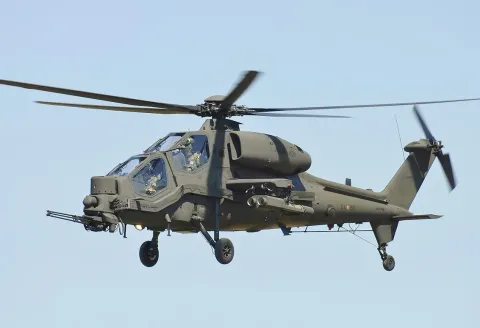
Leonardo
A129 Mangusta
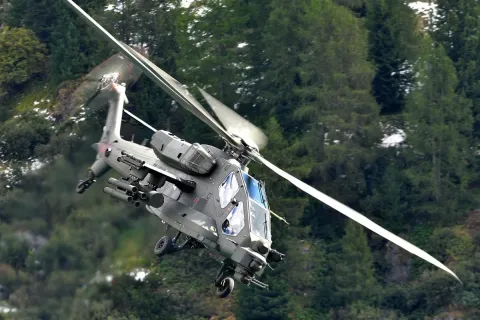
Leonardo
AW249 Fenice
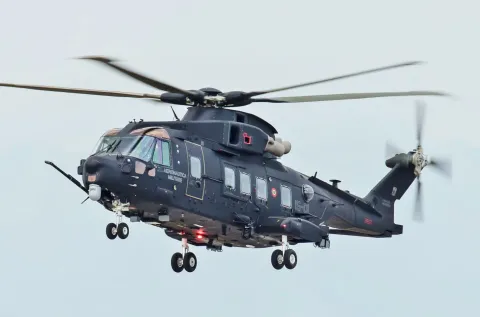
Leonardo
AW101 Merlin
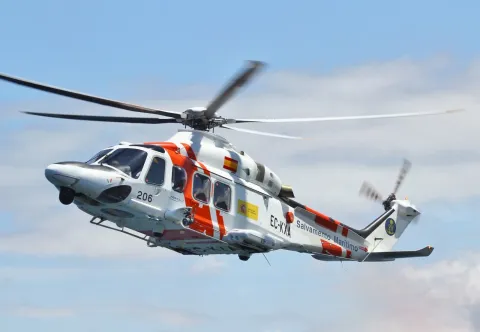
Leonardo