Product photos coming soon
Documents
 United States
 Palantir Technologies
Maven Smart System
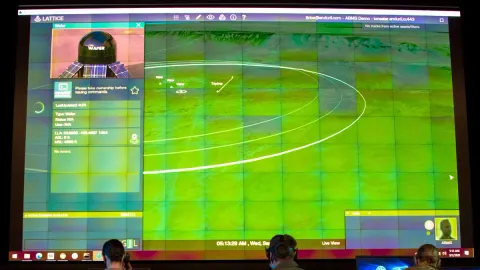
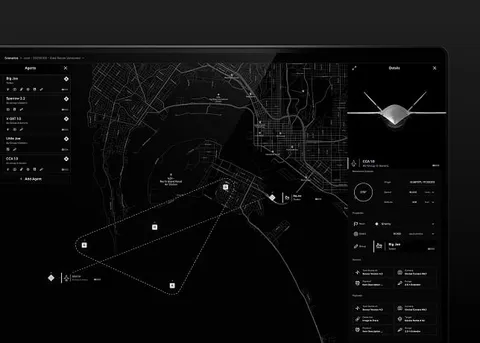
Palantir's AI-enabled intelligence-fusion and targeting platform for the US military's Combined Joint All-Domain Command and Control (CJADC2) effort, ingesting satellite, drone, signals and geolocation data into a single interface to compress targeting decision cycles. Formalized as a Pentagon program of record in 2026.
In service since 2024
Compiled from public sources ·primary reference ↗
Pricing: Awarded as a $480 million, five-year US Department of Defense contract in May 2024; the Pentagon raised the contract ceiling to $1.3 billion by May 2025
Procurement snapshot
Availability & export
US ITAR-controlled
Export needs U.S. State Dept (DDTC) approval; end-use & re-transfer restrictions apply.
Channel: Foreign Military Sales (FMS) or Direct Commercial Sale
Fielded & proven
Operator data not public
In service since 2024. Status: active.
Lifecycle cost (est.)
No public unit price to model from. Why so few systems publish one →
Interoperability
No standardised NATO calibre / datalink detected in public specs.
Competitive field
17 comparable systems from 16 other manufacturers
Counted in the WeaponSpecs database: combat & C2 software built by another manufacturer that share at least one published role with this system. A count of what this catalog holds, not a survey of the whole market. See the alternatives →
Derived guidance from public data, export regime by country of origin, lifecycle from the GAO ~30% acquisition rule. Verify eligibility, pricing and offsets with the manufacturer and your acquisition authority.
Overview
Maven Smart System (MSS) is Palantir's AI-enabled platform supporting the US military's Combined Joint All-Domain Command and Control (CJADC2) effort, fusing satellite imagery, drone footage, signals intelligence and geolocation feeds from numerous separate legacy systems into a single searchable, visualized interface for targeting and operational planning. Palantir won the initial $480 million, five-year Maven Smart System contract in May 2024, and the Pentagon expanded the contract ceiling to $1.3 billion by May 2025 amid growing demand across combatant commands. As of March 2026 the system had more than 20,000 active users spanning US Indo-Pacific, European, Central, Northern, Space, Transportation and Africa Commands, along with the Joint Staff, Cyber Command and Strategic Command. In 2026 the Department of Defense formally designated Maven Smart System a program of record under a memo from the Deputy Secretary of Defense, with oversight moving to the Chief Digital and Artificial Intelligence Office and future contracting handled by the US Army; the system has also been used to support targeting workflows in recent Middle East operations.
Full specifications
Software & C2
Command, control, mission and combat-system software capability.
| Software type What the software does: combat management, battle management, mission planning, fire control, EW management, cyber defense or ISR fusion. | AI intelligence fusion / targeting (CJADC2) |
|---|---|
| Operating domains Warfare domains the software covers: air, land, sea, subsurface, space, cyber. More domains means broader joint integration. | Multi-domain |
| Open architecture Standards-based, modular design (FACE, OMS/UCI, SOSA) versus a closed proprietary stack. Open architecture eases upgrades and third-party integration. | Proprietary |
Specifications compiled from public Palantir Technologies and reference sources ↗. Published defense figures are approximations, treat comparisons as directional. Last verified 2026-08-24.
Compare with rivals
See how it stacks up
 Aselsan MERKEZ Naval Combat Management System
 Frequently asked questions
What is the Palantir Technologies Maven Smart System used for? +
The Palantir Technologies Maven Smart System is a software & c2 typically used for command control, isr, target acquisition.
How much does the Palantir Technologies Maven Smart System cost? +
Palantir Technologies Maven Smart System: Awarded as a $480 million, five-year US Department of Defense contract in May 2024; the Pentagon raised the contract ceiling to $1.3 billion by May 2025. Defense program costs are rarely fully public and vary by contract and configuration.